 Racing
 games.
GAME CATEGORY
Steering, obstacle reading and faster clean runs. These titles combine cornering, lane runners and obstacle courses where late corrections are expensive. The guides emphasise looking past the nearest obstacle, choosing a stable line and changing one part of a failed run at a time.
What the racing shelf groups, and why
Seven guides sit on the racing shelf, and very few of them involve a throttle. Road Crash rolls your car forward down a packed road while you choose a lane, Race Masters Rush does the same against traffic and barriers, and Winding Road keeps a vehicle on a twisting path until any part of it slips off the edge. Forward motion is handled for you in nearly every case, which leaves the whole driving job in the sideways input.
Reading past the nearest obstacle is the habit these games share. In the lane runners a gap only counts if it is still open by the time you are through it, so a lane that looks inviting two car lengths ahead is worth less than a dull one that stays clear. Winding Road makes the same point about corners: begin the correction early, let the vehicle arc through the bend, and drift back toward the middle as the road straightens rather than reacting to the edge directly under the wheels.
Drift Race 3D adds a second layer by chaining its corners. How one slide ends decides how the next one begins, so a run is a connected sequence rather than a set of separate turns. A car that exits a bend pointed along the road makes the following corner cheap, while one that leaves sideways spends the whole straight being reeled back in. Treating the finish as a reward for clean exits rather than for speed is the useful thing to carry into a first lap.
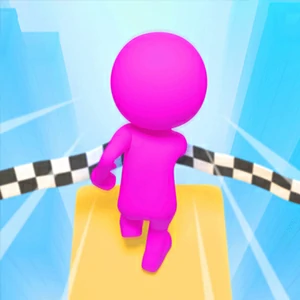
Obstacle courses sit alongside the racers with a similar priority. Fall Race 3D sends you across moving platforms and gaps that open on their own timers, so the run reads as a rhythm problem: watch a deck swing into place, step onto it, and be moving again before the next gap appears. Letting one cycle pass before committing costs a moment and saves the fall, which is the trade the guide recommends for the first couple of obstacles.
Controls stay narrow on purpose across the shelf. Arrow keys, a sideways mouse drag, an on-screen joystick or a finger swipe all feed the same single instruction, and the games that add something extra keep it optional, as with the slow-motion key that helps in a crowded stretch. Picking the input you can hold steady matters more than picking the fastest one.
These titles fit short sessions better than long ones. Most runs end on their own result screen, which gives you a natural place to stop after a single attempt or to chain a few while a streak is going well. If you prefer a game where you build something over time instead of repeating a clean attempt, the strategy shelf is a better match.
Racing
 Racing
 Racing
 Racing
 Racing
 Racing