ROPE AND STAGE
One rope as your only tool on a 3D stage
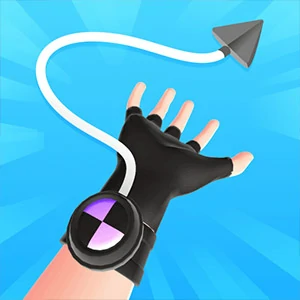
Ropeman 3D is a three-dimensional action-puzzle where a figure fires a rope from one spot to another. Each level drops you onto a compact 3D stage of ledges, props, and moving pieces, and the rope is the single tool you have to reach, bind, or tow them, so every attempt comes down to where you aim and when you throw.
The first level opens with a level marker and labels like Item and Prop sitting beside the scene, so the stage advertises what it wants before you throw. Your eye learns to read those words as a checklist: each label names a contact the rope can make.
MARKED TARGETS
Land the rope on the marked target
Use the rope to finish the level's target: pull an object into place, snare a moving piece, or reach the point the scene marks. An in-game prompt spells the core rule plainly: tap to aim at the enemy. So the rope is not decoration; it is a lasso aimed at whatever the stage names as its prize or threat.
The enemy wording is the clue to the loop: the stage presents a marked foe or object, and a clean throw that connects with it moves the level forward. A throw that lands on nothing, or on a spot the scene rejects, simply wastes the attempt and sends you back for another shot.
AIM, THEN FIRE
Settle the crosshair before the rope flies
Move the crosshair with the mouse, or drag a finger across the screen, to line up the shot. Click, tap, or release to throw the rope, which travels to wherever you aimed, so settle the aim before firing instead of flicking it at the last second.
On touch, the aim follows your finger, which keeps the arc in front of you the whole time; on mouse, the crosshair moves with the cursor and the throw happens on the click. Either way, the sequence is the same: line up, hold the line, then let the rope go.
READ THE LEVEL OPENING
What the opening screen tells you
On a new level, hold off on the first throw. The opening frame lists what is in play (the level marker, the items, the props, and the aim prompt), so give that read before acting. Look for the hold the scene wants you to hit, usually a glowing or clearly marked point.
Plan the throw while the stage is still: wait until the path between you and the target is clear before the rope goes out. A few seconds of reading beat a fast, random fire, and a settled opening sets the rhythm for the rest of the level.
RESTART OR REVIVE
When a throw goes wide: restart or revive
When a throw misses, the level ends with a clear fail panel rather than a quiet reset. The panel offers a restart to begin again with a clean slate, and a revive option sits beside it for jumping straight back in. Either choice sends you toward the same marked target.
Use each fail as a scouting run: note which spot rejected the rope, then adjust the aim on the next attempt. The fail panel makes this loop painless, so a missed throw reads as information rather than a setback: one more read of the stage, one cleaner throw to follow.