The rolling block
A shape that shifts as it rolls
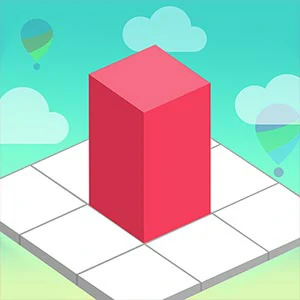
Roll The Block gives you a rectangular block on a grid and a marked destination to reach. The catch is that the block stands upright or lies flat depending on which way you tip it, so each move changes the footprint it occupies and which tiles it can safely cover.
That shifting footprint is the whole puzzle. A block standing tall takes up one tile, while a flat block covers two, so the same roll can open a path on one row and block it on another depending on the shape the board allows at that spot.
Reach the marked tile
Land on the marked square
Guide the block from its starting position to the marked square without letting any part of it hang off the board. Some levels also want it to arrive standing in a specific orientation, which adds one more constraint to the route you plan.
Every failed move is a learning point rather than a dead end, because it shows the exact spot where the block's footprint no longer fit. Reading where and why it failed is how you discover the intended path one small step at a time.
One tile per input
Tip the block one tile at a time
Press the arrow keys, use the on-screen direction buttons, or swipe on a touch screen to tip the block onto the next square in that direction. Each input rolls it exactly one tile, so the whole route is built from single, countable moves.
Because the block can never skip or slide, every plan has to be expressed in these single-tile rolls. That discipline is what makes the game fair: the board is fully readable, and the only thing between you and the solution is the order you choose to roll in.
Read two moves ahead
Look for open ground first
Before moving, compare the block's next footprint with the free tiles around it. Roll toward open space first, use the wider parts of the board to change its orientation, and only enter a narrow path once the block is aligned with it.
Most boards give you room to maneuver before the tight sections, so use that early space deliberately. And since restarting a level is quick, spend your first attempt mapping the footprint limits, then replay with a route already in mind instead of improvising at every tile.
Work backward from the finish
Plan the final move backward
Work out where the block must stand on the move just before it reaches the goal, then look for a route that gets it to that exact spot. Reverse planning skips a lot of dead ends, because most boards funnel you toward a handful of viable final positions.
Combine backward planning with the orientation rule: if the level asks for a standing arrival, the second-to-last move has to set that up exactly. Check that condition early and the forward search shrinks to the few paths that can actually deliver it.